
The Disposable Heart • Episode 1
Two Sides of the Same Swipe
She has too many choices. He can't get noticed. Somehow, they both feel disposable.
By Joel D. Bradley · 3-minute read
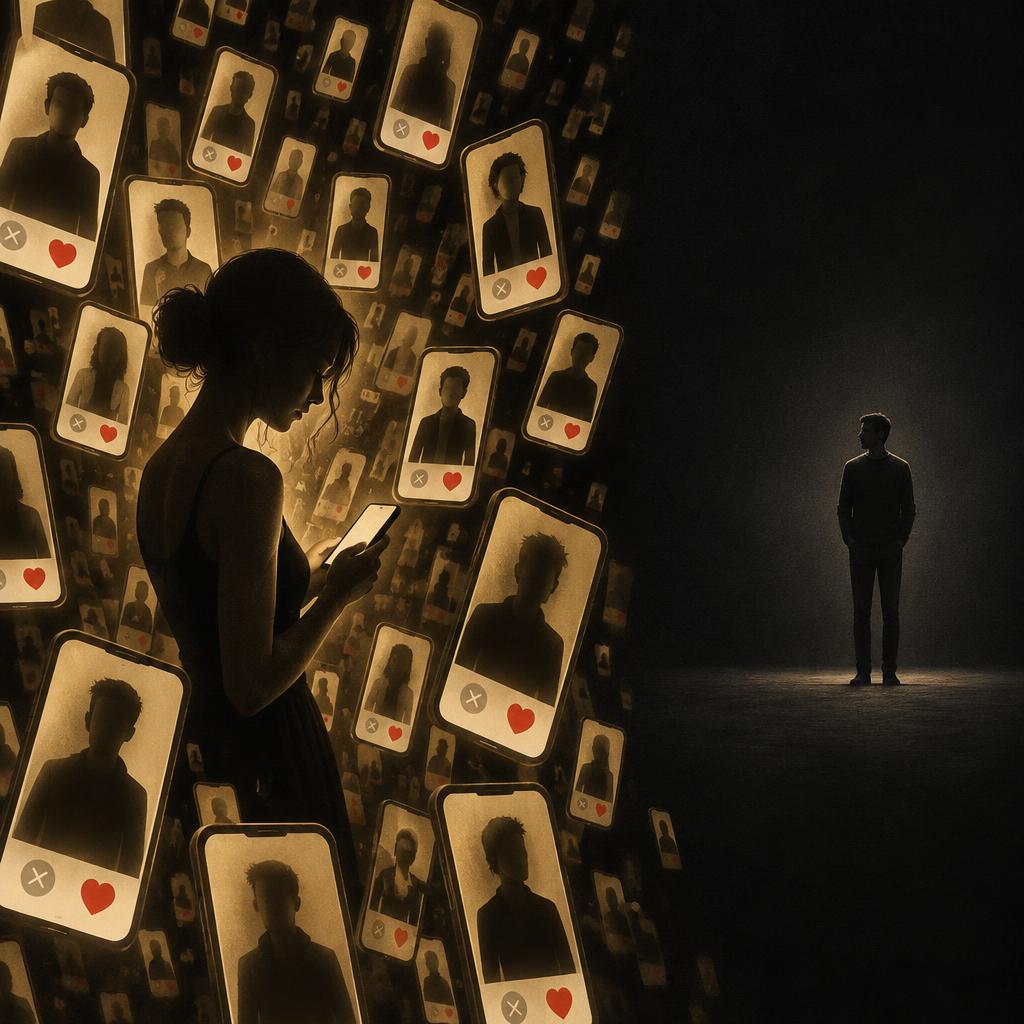
There has never been a time when people had access to more potential partners.
Thousands of profiles.
Endless possibilities.
Someone new waiting behind the next swipe.
You would think all that choice would make finding someone easier.
I'm beginning to wonder if it's doing something else.
She Has Too Many Choices
In the first episode of The Disposable Heart, I spoke with a 52-year-old divorced woman I'll call Lisa.
When Lisa became single after fourteen years of marriage, dating had changed.
The last time she was single, a man who wanted to meet her had to walk across a room and say hello.
Now she opens an app.
At first, she found it exciting.
There were men she never would have met otherwise. A match appeared. Her phone lit up. A conversation started.
Then she learned the new rules.
Don't text too quickly.
Don't text too much.
Don't seem too interested.
Don't ask why someone disappeared for four days.
Eventually, Lisa realized her problem wasn't finding men.
There were plenty of them.
Her problem was figuring out which ones were real—and which ones would still be there tomorrow.
She described the experience in a way I haven't forgotten:
“It felt like I was managing a depot of broken toys.”
Men she liked disappeared.
Men she didn't like wouldn't disappear.
Some wanted to text forever but never meet.
Others wanted to meet before she'd finished reading their profile.
But what bothered Lisa most wasn't rejection.
It was how easily people seemed to become replaceable.
There's always another profile.
Another swipe.
Another person waiting behind you.
He Can't Become a Choice
Across the state, I spoke with Daniel.
He's 57, lives in Tampa and describes himself as a pretty normal guy.
And that's exactly his problem.
Daniel isn't overwhelmed by choices.
He's trying to become one.
He started counting how many women he swiped right on before something actually happened.
A match might become a conversation.
The conversation might last three messages.
Maybe two days.
Eventually, one might become a coffee date.
Not romance.
Not a relationship.
Coffee.
When Daniel did the math, he estimated that he could go through close to a thousand right swipes before a woman actually sat across from him.
His experience wasn't really rejection.
Most of the time, he said, he never got far enough to be rejected.
He felt invisible.
The Same Destination
That's what struck me about Lisa and Daniel.
They're using the same technology and experiencing opposite problems.
Lisa is sorting through choices.
Daniel is trying to become one.
She wonders which door to open.
He's trying to get somebody to answer the door.
And somehow they've arrived at the same place.
Both are wondering whether they matter.
“Both are wondering whether they matter.”
That's the contradiction sitting underneath modern dating.
One person feels disposable because another option is always waiting.
Another feels disposable because nobody seems to notice he's there.
The technology isn't necessarily the villain. Dating apps introduce people every day who otherwise might never meet.
But unlimited possibility can quietly change the question we're asking.
Instead of:
Do I like this person?
It can become:
Could I do better?
Those are two very different questions.
Maybe that's what all this swiping is actually doing to us.
It's not simply changing how we find people.
It may be changing how long we're willing to see them as people before looking for the next one.
Too many choices—or struggling to become one?
Listen to Episode 1 of The Disposable Heart Podcast
Two Sides of the Same Swipe
Listen to Episode 1The Disposable Heart explores what modern dating is doing to the way we see, choose, and discard one another—inspired by the world of Joel D. Bradley's novel, Swipe Wright.
Discover Swipe Wright